
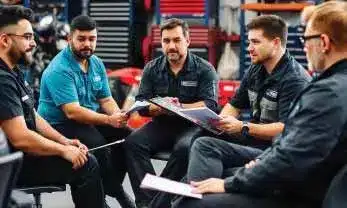
You’ve been there.
You person for your team – maybe a sharp technical specialist with diagnostic chops, a driven service advisor who knows how to win a customer’s trust or a QC lead who actually treats test drives like they matter. You breathe a sigh of relief… until the first week unfolds like a bad blind date
Why? Because as shop owners, we often assume “they’ll figure it out.” That kind of onboarding approach may have worked back in the day when carburetors were king, but today’s shops are dynamic businesses with
complex systems and real customer expectations. You can’t leave success to chance. You’ve got to build it on purpose.
The truth is, onboarding isn’t a box to check. It’s the foundation of everything that comes next. Your shop culture, your productivity, your retention rates – even your CSI score – onboarding touches them all
And yet, many shop owners invest more time in choosing the right scan tool than they do creating a plan to welcome new hires. That has to change.
Over the years, I’ve worked with hundreds of independent shop owners who’ve either nailed their onboarding process or learned the hard way why it matters. When done right, onboarding transforms a “new hire” into a productive, engaged team member faster, smoother and with fewer fires along the way.
Let’s break it down
ONBOARDING: NOT JUST FOR THE FRONT COUNTER
Whether you’re hiring a seasoned service advisor, a young technical specialist or a part-time porter,
onboarding matters at every level.
Here’s why:
- Technical Specialists: They may know how to fix cars, but do they understand your workflow, parts process or digital inspections?
- Service Advisors: They bring customer service savvy, but do they know your shop’s selling philosophy, courtesy inspection standards or how you schedule workflow?
- Support Staff: Your QC, shuttle drivers, porters and office administrators often make the first or last impression. Are they clear on how to represent your shop’s brand?
Don’t assume competence equals alignment. Even great hires need guidance to sync with your systems, expectations and, most importantly, your culture.
THE FIVE PILLARS OF GREAT ONBOARDING
‘Here are five proven strategies that top-performing shops use to onboard effectively:
1. Start Before Day One
What happens between the time they accept the offer and walk through your door? That window is pure gold.
A welcome email, an intro packet or even a simple video from you and your team makes a powerful impression.
Send them your org chart, dress code, schedule and a quick note about how excited you are to have them join the team.
One shop I work with in Arizona sends a “New Hire Care Package” with a branded T-shirt, water bottle and a handwritten note from the owner. The message? “You’re part of something.”
That feeling creates commitment before they’ve even punched in.
2. Make the First Day an Experience, not a Task List
Think of a first day like a first impression – it’s sticky. A solid first-day plan should include:
- A team meet-and-greet; A full shop tour;
- Review of the shop’s mission, vision and core values;
- Introduction to tools, systems and logins;
- Designated mentor or go-to person for questions.
And, here’s a pro tip: take your new hire out to lunch. Not a working lunch, just a genuine meal with you or a team leader. It’s one of the best trust-building investments you can make. Breaking bread is a solid way to connect with any team member
3. Use a 7-30-60-90-Day Framework
You wouldn’t try to eat a steak in one bite. Onboarding should be no
different. Break it down over time using milestones
Day 7: Confirm they have what they need. Are they comfortable with your systems? Do they feel welcomed?
Day 30: Review early wins and clarify expectations. Begin deeper training (e.g., workflow optimization, customer interactions or advanced diagnostics).
Day 60: Assess skill gaps and refine routines. Consider adding KPIs specific to their role.
Day 90: Conduct a formal review. Ask the question, “If you could wave a magic wand, what would make your role better?” This feedback is gold.
Every role benefits from this framework. It builds clarity, creates connection and avoids the dreaded “sink or swim” mentality.
4. Coach the Culture
Your shop has a culture, whether you designed it or not. But if your team can’t describe it in two or three words, it’s time to get intentional. A healthy culture doesn’t just attract top performers, it keeps them.
During onboarding, teach the unwritten rules:
- How do we talk to each other? How do we handle mistakes?
- What does a “great customer experience” look like here?
One high-performing shop I visited in Maryland has a Friday team huddle with core value shout-outs: “integrity,” “ownership” and “team-first.” New hires pick it up quickly. And it shows.
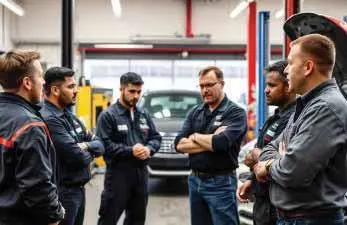
5. Involve the Whole Team
If onboarding is only the manager’s job, you’re missing out. Get everyone involved:
- Have your QC specialist walk them through quality expectations; Let your porter explain the flow of the lot and vehicle hand-offs;
- Have your admin show how repair orders are closed and payments processed.
This builds team buy-in and avoids the “who is this person?” feeling. It also spreads the responsibility of culture-building throughout the organization.
WHY IT MATTERS MORE THAN EVER
Let’s face it, hiring is harder than ever. And great employees aren’t staying just for the paycheck. They stay for leadership, clarity and purpose. Onboarding is your first opportunity to deliver all three
In fact, studies show that structured onboarding can improve retention by over 50%. That’s real money saved in hiring, training and lost productivity.
And it’s not just about retention, it’s about engagement. When a new hire feels seen, trained and connected, they perform better. Period.
A well-onboarded technical specialist doesn’t just produce more hours;
they do it with fewer comebacks. A well-onboarded service advisor doesn’t just answer phones; they increase your ARO. A well-onboarded office admin doesn’t just process payments; they protect your cash flow and image.
FINAL THOUGHTS AND A PERSONAL NOTE
When I think back to some of the biggest missteps I made as a shop owner, they almost always trace back to assuming people “just know.” We
didn’t onboard with a purpose. We hired, handed them a uniform and hoped they’d be a fit. Sometimes it worked. But more often, it didn’t.
Today, we coach shop owners across the country to build onboarding as a process, not an event. Because let’s be honest, if we don’t define the standard, someone else will. It is highly likely
that their version will not match what excellence looks like in your shop.
CALL TO ACTION
If you don’t have a written onboarding plan, now’s the time. Sit down this
week and outline your 7-30-60-90-day framework for each role: technical specialist; service advisor; and support staff. Assign mentors. Define the culture. Make the first day count.
Need help getting started? Reach out. At Shop Owner Coach, we’ve helped shops across North America transform their onboarding experience and their results. You’ve already done the hard part: hiring someone great.
Now let’s make sure they become great in your shop.
If you would like a worksheet to complement this article, email Vic for a free action plan to help you get started with Best Practices for Onboarding. Ready to get rolling with a coach? Vic Tarasik is the founder of Shop Owner Coach, a coaching and training organization that is committed to helping independent repair shop owners achieve their dreams through the intentional application of best business practices. Contact him to discuss how working with a coach can benefit you and your shop. He has been an independent auto repair professional for more than three decades of shop ownership in The Woodlands, TX. Book a complimentary coaching session by simply emailing him to set it up! Vic can be reached at Vic@ShopOwnerCoach ShopOwnerCoach.com