
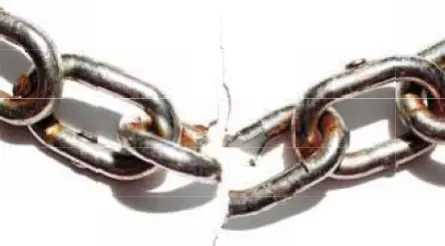
The fastest way to kill productivity in your service center isn’t a broken liftkill productivity in your service center sn’t a broken liftor a back-ordered part; it’s a conversation that never happened. Misunderstandings, half-answers and missed details can cost more than any tool in your shop.
In the aftermarket, every word matters. From the WD to the counterman, from the service advisor to the bays, one weak link in the communication chain can bring the whole operation to a grinding halt.
In my years writing for Shop Owner Magazine, I’ve tackled topics like onboarding, time management and eadership. But underneath all those strategies runs the heartbeat of every thriving shop: communication.
It’s not just the words we speak, it’s how clearly, consistently and respectfully we connect with the people around us. In the aftermarket, communication isn’t a “soft skill.”t’s the lifeline that keeps the whole operation moving.
From the warehouse distributor pulling the right part to the counterman relaying critical updates to the shop owner and service advisor passing that informationto the bays, every link in the chain matters. When communication works, cars get fixed faster, customers are happier and everyone makes more moneyBut when it breaks down? Delays, comebacks and frustration ripple through the entire system. That’s why I want to dig into how information flows in our world and how we canall get better at keeping that chain strong.
THE COMMUNICATION CHAIN IN ACTION
If you map it out, the aftermarket communication chain looks something like this:
Manufacturer WD Counterman Shop Owner Service AdvisorTechnical Specialist.
At each link, information can either be delivered clearly and accurately, or it can get fuzzy, vague or misinter-preted. The more links there are, the greater the risk of a breakdown.
- I’ve seen it happen countless times:A counterman hears a product change but doesn’t pass it along promptly.
- A service advisor assumes the technical specialist “will figure it out” instead of explaining the repair order in detail.
- The WD sends an email with key product changes, but the shop owner never sees it because it gets buried in a crowded inbox.
Each one of those breakdowns costs time, money and customer trust.

ACCURACY IS EVERYTHING
Clarity and accuracy in parts information are non-negotiable. An incorrect VIN, wrong part number, an unclear application note or outdated availability information can throw a whole day off track.
Remember a parts pro who made it his mission to confirm every special-order part with the service advisor before shipping. It took him two extra minutes, but it prevented countless comebacks. That’s the difference between “order taker” and “problem solver.”
On the flip side, I’ve seen service advisors and countermen rush through calls and miss key details, leaving the entire chain scrambling when the part shows up and doesn’t fit. That’s not just a parts problem; it’s a communication problem.
In the bays, time really is money, and if a counterman takes hours to respond to a question, productivity stalls.
That’s why real-time updates and proactive communication are so powerful. One of the best countermen I’ve known treated every call as urgent until proven otherwise. If he didn’t have an answer, he said so and gave a timeline for when he’d follow up. Shops trusted him because he never left them hanging.
Great countermen don’t just move product; they move information in both directions. They advocate for the shop when talking to the WD and they convey WD priorities and constraints back to the shop.
The best ones are educators, too. They can walk a service advisor through a new product line or help a technical specialist understand why a certain part supersedes another. That builds respect and loyalty far beyond a single order.
I’ve written before about onboarding new team members and the importance of setting them up for success from Day One. A big part of that is teaching how to communicate between the front counter and the bays.
This is where the “telephone game” can cause chaos. A customer explains a concern to the service advisor, who paraphrases it to the team lead, who summarizes it for the technical specialist; suddenly, the actual problem is nowhere near what the customer originally described.
Clear, detailed and consistent service advisor-to-technician communication doesn’t just improve repair accuracy; it boosts morale.
Technical specialists want to feel informed and respected, not left guessing.
Shop management systems, chat tools and shared order tracking platforms have made communication faster and more transparent. But technology is only as good as the habits behind it I’m still a believer in the value of a good old-fashioned phone call, especially when you need to build or repair a relationship. Text and email are efficient, but voice-to-voice is where tone, empathy and trust come through.
One of the most effective things you can do in your shop and with your vendors is to set clear expectations for communication. Agree on response times. Decide on preferred channels. And when in doubt, confirm understanding before acting.
When breakdowns happen, avoid finger-pointing. Instead, focus on creating feedback loops. I’ve seen shop owners do quick post-job huddles to review what went right and what could have been communicated better. Over time, that builds a culture of continuous improvement.
TRAINING THE SKILL THAT PAYS THE BILLS
Here’s something I’ve learned from both Dale Carnegie courses and my time in Toastmasters International: communication is a skill you can sharpen for life.
Carnegie taught me the art of really listening, not just hearing words, but understanding the other person’s perspective. Toastmasters pushed me to be clear, concise and confident, whether I was speaking to one person or a hundred.
If you want your team to improve communication, give them the chance to practice in a safe, structured environment. WDs, countermen, service advisors and technical specialists can all benefit from communication training.
When everyone speaks the same “communication language,” the chain gets stronger.
At the end of the day, every part of the aftermarket, from the parts house to the bay floor, runs on communication. The right part, the right time, the right information – it all starts with clear, consistent conversations.

SO HERE’S MY
CHALLENGE FOR YOU THIS WEEK:
- Map Your Communication Chain: Trace how information moves through your world. Highlight where delays or confusion happen most often.
- Set Clear Response Expectations: Decide with your team and your vendors how quickly you’ll respond and how you’ll communicate.
- Run a One-Week Audit: Each day, track one communication win and one breakdown. Share the results with your team and pick one improvement to implement.
If you’re serious about leveling up, invest in Dale Carnegie training for listening and relationship skills, or join Toastmasters International to sharpen your clarity and confidence.
In our industry, the strongest shops aren’t just the ones with the best tools or the fastest turnaround. They’re the ones that keep the communication chain strong link by link, conversation by conversation.
If you would like a worksheet to complement this article, email Vic for a free action plan to help you get started with Keeping the Chain Strong. Ready to get rolling with a coach? Vic Tarasik is the founder of Shop Owner Coach, a coaching and training organization that is committed to helping independent repair shop owners achieve their dreams through the intentional application of best business practices. Contact him
to discuss how working with a coach can benefit you and your shop. He has been an independent auto repair professional for more than three decades of shop ownership in The Woodlands, TX. Book a complimentary coaching session by simply emailing him\ to set it up! Vic can be reached at Vic@ShopOwnerCoach r ShopOwnerCoach.com